

When choosing materials for a tile installation, most homeowners naturally spend considerable time selecting the right tile design, colour, size, and finish. However, the material underneath the tile is equally important. A beautiful porcelain, ceramic, or vitrified tile can still develop problems if it is installed with an unsuitable bonding material or applied incorrectly.
This is why tile bond in Pakistan has become an important consideration for homeowners, contractors, builders, architects, and professional tile installers.
Tile bond, also commonly called tile adhesive, is designed to create a reliable connection between the tile and the prepared surface. Modern tile adhesives are available for different tile types, substrates, sizes, and installation environments. The correct choice depends on the requirements of the particular project rather than simply selecting the strongest-sounding product.
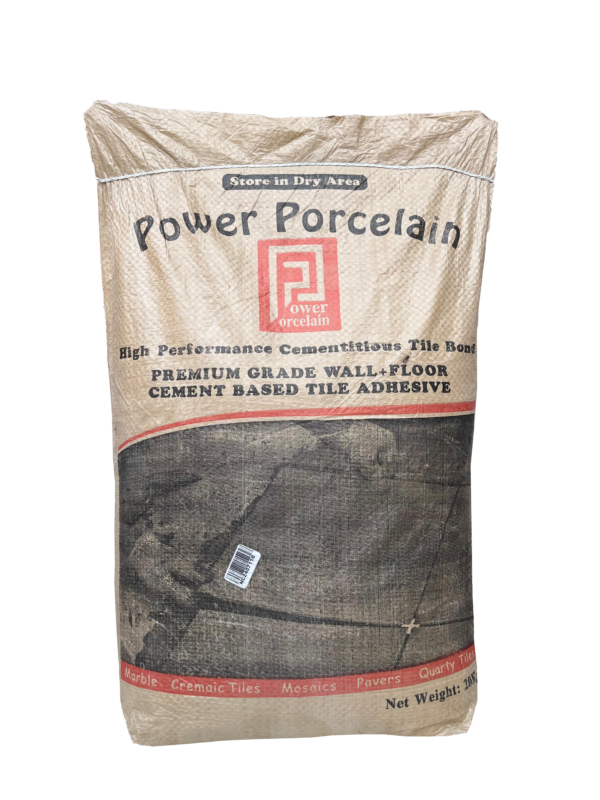
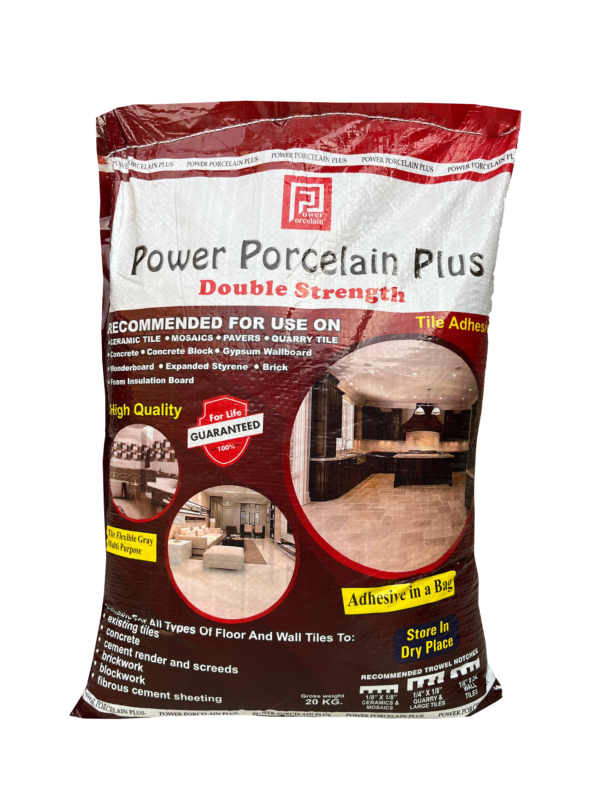
Power Porcelain provides a tile-bonding solution intended for modern tile installation requirements. Before purchasing any tile bond, however, it is important to understand what the product does, where it can be used, how it should be applied, and what factors can affect the final result.
This guide explains the important points you should consider when buying and using tile bond in Pakistan.
What Is Tile Bond?
Tile bond is an adhesive material used to fix tiles onto prepared surfaces such as cement-based walls, concrete floors, screeds, and other suitable substrates.
Unlike a basic cement-and-sand mixture prepared directly at a construction site, a manufactured tile adhesive is formulated specifically for tile installation. Depending on the product, its formulation may include cement, graded aggregates, polymers, and other additives designed to improve characteristics such as adhesion, workability, water retention, and application performance.
The exact properties vary from one product to another, which is why reading the manufacturer’s technical information is important.
A tile installation is not only about the tile itself. The final performance depends on several connected elements:
- Tile type
- Tile size and weight
- Substrate condition
- Adhesive selection
- Adhesive coverage
- Mixing method
- Trowel selection
- Installation technique
- Environmental conditions
- Grouting and finishing
Choosing an appropriate tile bond is therefore part of a complete installation system.
Why Is Tile Bond Important in Modern Construction?
Tile designs have changed considerably. Large-format porcelain and vitrified tiles are increasingly used in residential and commercial interiors, while ceramic tiles remain popular for kitchens, bathrooms, walls, and floors.
Porcelain tiles are particularly dense and have very low water absorption. This means that installers need to pay attention to adhesive compatibility and coverage instead of assuming that any cement-based material will provide the same result.
A properly selected tile adhesive can help create consistent contact between the tile and substrate when the installation is carried out according to the product instructions.
Poor material selection or poor application can contribute to problems such as:
- Loose tiles
- Hollow-sounding areas
- Uneven tiles
- Tile movement
- Debonding
- Cracked joints
- Difficult repairs
- Additional installation costs
This does not mean that the adhesive alone determines the success of an installation. Surface preparation and installation technique are equally important.
Tile Bond in Pakistan: What Should You Look for Before Buying?
The market includes different tile adhesives designed for different applications. Before buying tile bond in Pakistan, consider the following factors.
1. Identify the Tile Type
Start with the tile.
Is it:
- Ceramic?
- Porcelain?
- Vitrified?
- Mosaic?
- Natural stone?
- Large-format porcelain?
- A specialty tile?
Different materials have different characteristics.
Ceramic tiles can have higher water absorption than porcelain tiles, while porcelain is denser and less porous. Natural stone can have additional requirements depending on the type and installation environment.
Always confirm that the selected adhesive is intended for the specific tile being installed.
2. Consider Tile Size
Tile dimensions are another important factor.
A small ceramic wall tile does not create exactly the same installation requirements as a large-format porcelain tile.
Large tiles can require greater attention to:
- Surface flatness
- Adhesive coverage
- Trowel selection
- Tile handling
- Back coverage
- Alignment
For large-format installations, installers should follow the adhesive manufacturer’s recommendations and the relevant tile installation guidance.
3. Check the Surface
Even a high-quality adhesive cannot compensate for a weak or unsuitable substrate.
Before installing tiles, the surface should be properly assessed.
It should generally be:
- Sound
- Clean
- Stable
- Free from loose material
- Free from dust and grease
- Suitable for the selected adhesive
Paint, dust, oil, loose plaster, weak concrete, and other contaminants can interfere with adhesion.
If a wall or floor has significant cracks, movement, moisture problems, or severe unevenness, these issues should be addressed before tile installation.
4. Consider Where the Tile Will Be Installed
The location of the installation matters.
A living-room floor, bathroom wall, kitchen backsplash, balcony, exterior wall, and commercial floor can have very different requirements.
For example, bathrooms and kitchens may experience frequent moisture exposure. Outdoor installations may experience weather and temperature changes. Commercial floors may experience heavier traffic than residential areas.
Therefore, don’t choose a tile bond only because it is described as “strong.” Check whether the product is suitable for the actual application.
Power Porcelain for Tile Installation
Power Porcelain can be considered when looking for a dedicated tile-bonding solution for modern tile installation projects.
The name itself reflects a common application area in today’s construction market: porcelain and other modern tile surfaces.
For homeowners, builders, contractors, and tile installers, the important question should always be whether the particular Power Porcelain product is suitable for the intended tile, substrate, and installation environment.
Before beginning a large project, review the current product packaging and technical information for:
- Recommended tile types
- Suitable substrates
- Interior or exterior applications
- Mixing instructions
- Application thickness
- Working time
- Coverage
- Setting requirements
- Storage conditions
Technical information is more useful than relying only on general marketing descriptions.
Tile Bond vs Traditional Cement and Sand
Traditional cement-and-sand methods have been used for tile installation for many years. However, modern tile installation increasingly involves dense porcelain, vitrified tiles, and large-format products.
Tile adhesive is specifically formulated for tile fixing, while traditional mortar is a broader construction material.
A comparison should therefore focus on the requirements of the project.
| Factor | Tile Bond | Traditional Cement-Sand Mortar |
|---|---|---|
| Primary purpose | Tile fixing | General masonry/bedding applications |
| Consistency | Factory-formulated | Usually site mixed |
| Application | Usually applied with a notched trowel | Commonly installed as a mortar bed |
| Tile compatibility | Depends on product specification | Depends heavily on installation method |
| Large-format tiles | Requires suitable adhesive and technique | Requires an appropriate system and experienced installation |
| Mixing | Follow manufacturer ratio | Site mix varies |
| Thickness control | Generally easier in thin-bed applications | Depends on mortar-bed method |
The correct choice depends on the tile, substrate, project requirements, and installation system.
For modern porcelain installations, it is especially important not to assume that a traditional method will automatically provide the required result.
How to Apply Tile Bond Correctly
Selecting the right product is only the first step. Application has a major effect on the finished installation.
Step 1: Prepare the Surface
Clean the substrate thoroughly.
Remove:
- Dust
- Dirt
- Grease
- Loose particles
- Weak material
- Other contaminants
Check that the surface is suitable for tiling before mixing the adhesive.
If the substrate is significantly uneven, correct it using an appropriate preparation method rather than trying to compensate with excessive adhesive thickness.
Step 2: Mix According to Instructions
Always use the water quantity specified by the manufacturer.
Add the recommended amount of clean water and gradually mix in the dry adhesive.
The objective is a consistent mixture without lumps.
Avoid adding excessive water simply because it makes the adhesive easier to spread. Changing the recommended mixing ratio can affect product performance.
Step 3: Choose the Correct Notched Trowel
Tile adhesive is commonly applied using a notched trowel.
The appropriate notch depends on factors such as:
- Tile dimensions
- Tile back profile
- Substrate condition
- Adhesive type
- Installation requirements
The goal is proper adhesive coverage rather than simply spreading a thick layer.
Step 4: Spread the Adhesive
Apply the adhesive to the prepared surface and comb it using the notched edge of the trowel.
Work in manageable areas.
Do not spread more adhesive than you can cover with tiles within the product’s working time.
If the surface of the adhesive begins to form a skin, tile placement may no longer produce the required contact.
Step 5: Place the Tile
Place the tile carefully into the adhesive.
Apply appropriate pressure and move the tile as recommended to help achieve contact.
For larger tiles, additional adhesive application to the back of the tile may be required depending on the installation system and manufacturer recommendations.
Step 6: Check Alignment
Before the adhesive sets, check:
- Tile alignment
- Level
- Joint spacing
- Surface appearance
- Tile position
Correcting small alignment problems while the adhesive remains workable is much easier than trying to repair them later.
Step 7: Allow Proper Setting Time
Do not rush the installation.
Walking on a newly installed floor or grouting too early can disturb the tiles.
Setting and curing times vary according to the product and environmental conditions, so always follow the instructions provided with the specific Power Porcelain product being used.
How Much Tile Bond Do You Need?
One of the most common questions from homeowners and contractors is:
How much tile bond is required for a project?
There is no single quantity that applies to every installation.
Consumption depends on:
- Total tiled area
- Tile dimensions
- Trowel notch
- Adhesive thickness
- Surface flatness
- Tile-back profile
- Application technique
- Installer experience
For example, a smooth, properly prepared surface may require a different amount of adhesive than a significantly uneven substrate.
The best approach is to calculate the total area first and then use the coverage information supplied for the exact product and application method.
For large projects, it is sensible to estimate material requirements before purchasing the complete quantity.
Common Mistakes When Using Tile Bond
Many tile installation problems are caused not by the concept of tile adhesive itself but by incorrect preparation or application.
Using Too Much Water
Adding extra water can change the consistency and performance of the adhesive.
Always follow the manufacturer’s specified mixing ratio.
Applying Adhesive Over Dusty Surfaces
Dust creates a barrier between the adhesive and substrate.
The surface should be cleaned before application.
Ignoring Tile Size
A bonding method suitable for small tiles should not automatically be assumed suitable for large-format porcelain.
Always check the product recommendations.
Installing Over a Weak Surface
If the substrate itself is unstable or weak, the tile installation can fail regardless of adhesive quality.
Prepare the substrate first.
Spreading Too Much Adhesive
Only spread an area that can be tiled within the adhesive’s working time.
If the adhesive begins to skin over, proper bonding may be affected.
Choosing Only by Price
The cheapest bag may not be the most economical option if it is unsuitable for the project.
A failed tile installation can result in additional costs for:
- Removing tiles
- Buying new tiles
- Buying additional adhesive
- Labour
- Transportation
- Reinstallation
The better approach is to compare suitability, coverage, application requirements, and expected performance.
Tile Bond for Bathrooms and Kitchens
Bathrooms and kitchens are among the most common areas where tile adhesive is used.
These spaces can experience moisture, cleaning chemicals, temperature changes, and frequent use.
When selecting tile bond in Pakistan for these areas, check that the adhesive is appropriate for the tile and substrate.
It is also important to understand that tile adhesive and waterproofing are not necessarily the same thing.
If a bathroom or wet area requires a waterproofing system, waterproofing should be addressed separately according to the project’s construction requirements.
Good waterproofing, suitable adhesive, correct tile installation, and appropriate grout work together as part of a complete tiled-area system.
Tile Bond for Floor Tiles
Floor tiles experience loads that wall tiles generally do not.
People walk over them, furniture may sit on them, and commercial areas can experience significant traffic.
For floor installations, consider:
- Tile material
- Tile size
- Expected traffic
- Substrate condition
- Adhesive compatibility
- Coverage
- Correct installation technique
Large-format floor tiles require particular attention to surface flatness and adhesive coverage.
Tile Bond for Wall Tiles
Wall installations have their own requirements.
The adhesive must provide appropriate support while the tile is being positioned and during setting.
Large wall tiles can be particularly demanding because their weight and dimensions make correct adhesive selection and application important.
For vertical surfaces, check the manufacturer’s recommendations regarding tile size, slip resistance, application thickness, and working time.
Why Surface Preparation Matters
One of the most overlooked parts of tile installation is surface preparation.
Imagine placing an expensive tile onto a dusty, weak, or unstable wall.
Even if the tile bond is correctly mixed, the bond can be limited by the condition of the surface underneath.
This is why experienced installers focus on the complete installation rather than the adhesive alone.
Before installation, ask:
Is the substrate strong enough?
Is it clean?
Is it stable?
Is it sufficiently flat?
Is there any moisture problem?
Is it compatible with the selected adhesive?
Answering these questions before starting can prevent many avoidable problems.
How to Choose Tile Bond in Pakistan for Different Projects
When buying tile bond, think about the project in this order:
For Home Renovation
Check the tile type, room location, surface condition, and tile size.
For New Residential Construction
Consider the complete quantity and make sure the adhesive selected is appropriate for the different tile applications throughout the property.
For Commercial Projects
Pay additional attention to traffic, tile dimensions, substrate preparation, installation productivity, and product suitability.
For Large Porcelain Tiles
Focus particularly on adhesive compatibility, substrate flatness, coverage, and installation technique.
For Bathroom Projects
Consider tile compatibility and moisture exposure, while addressing waterproofing separately where required.
Why Buying From a Reliable Tile-Bond Supplier Matters
When purchasing tile bond in Pakistan, product availability is only one consideration.
Reliable suppliers and manufacturers can help customers access:
- Product information
- Application instructions
- Technical specifications
- Packaging information
- Recommended uses
- Dealer support
- Project guidance
This is especially useful for contractors handling larger projects.
If you are buying a significant quantity, ask for the latest technical information rather than relying on old advice or assumptions.
Frequently Asked Questions About Tile Bond in Pakistan
What is tile bond used for?
Tile bond is used to fix tiles to suitable prepared surfaces. Depending on the product, it can be designed for ceramic, porcelain, vitrified, mosaic, or other tile applications.
Is tile bond better than cement?
There is no universal answer because the correct material depends on the tile, substrate, installation method, and project conditions. Tile adhesive is specifically formulated for tile fixing, while traditional cement-sand mortar is used through a different installation approach.
Can tile bond be used for porcelain tiles?
Some tile adhesives are specifically suitable for porcelain tiles. Because porcelain has low water absorption, always confirm that the selected adhesive is approved for porcelain before installation.
Can Power Porcelain be used for floor tiles?
The answer depends on the specific Power Porcelain product and its current technical recommendations. Check the product packaging and manufacturer’s instructions for the intended tile and substrate.
Can tile bond be used on walls?
Yes, products designed for wall applications can be used for wall tiles. However, tile size, weight, substrate, and adhesive specifications should be checked before installation.
How much tile bond is required per square foot?
There is no fixed amount for every project. Consumption depends on the tile size, trowel notch, adhesive thickness, substrate flatness, and installation method. Use the coverage information provided for the exact product.
Can tile bond be used in bathrooms?
A suitable tile adhesive can be used for bathroom tile installations when it is compatible with the tile and substrate. However, adhesive should not automatically be treated as a replacement for a dedicated waterproofing system.
Why do tiles become loose after installation?
Loose tiles can result from several factors, including poor surface preparation, insufficient adhesive coverage, incorrect mixing, unsuitable adhesive selection, movement in the substrate, or incorrect installation.
Is tile bond suitable for large tiles?
Some tile adhesives are designed for large-format tiles, but suitability depends on the specific product. Large tiles require careful attention to substrate flatness, adhesive coverage, trowel selection, and installation technique.
What should I check before buying tile bond in Pakistan?
Check the tile type, tile size, substrate, installation location, moisture exposure, product specifications, coverage, mixing requirements, and recommended application method.
Final Thoughts
Choosing tile bond in Pakistan should not be treated as a simple decision based on price or the word “strong” printed on a package.
A successful tile installation starts with understanding the complete project.
The tile, substrate, adhesive, application method, and environment all need to work together.
For porcelain, ceramic, vitrified, and other modern tile installations, Power Porcelain can be considered as part of your tile-bonding options. Before purchasing, make sure the particular product is suitable for your tile, surface, and installation conditions.
Most importantly, follow the manufacturer’s latest instructions for mixing, application, coverage, setting, and storage.
A quality tile deserves a properly prepared surface and an appropriate bonding system. When the material is selected carefully and installed correctly, you can create a cleaner, more stable, and more durable tiled surface for residential and commercial projects across Pakistan.